
Sustainability goals dominate construction industry conversations as conventional building methods generate hundreds of millions of tons of waste annually. However, the gap between ambition and reality remains stark. In contrast, 2024 research from the Journal of Management in Engineering found that modular approaches reduced overall construction waste by 78.8% across documented case studies.
Effective jobsite waste management has become essential as the industry confronts its environmental impact. Factory-controlled modular construction processes fundamentally reshape how the industry handles materials and reduce environmental harm, offering a proven alternative to conventional waste patterns
Photo by Marek Studzinski on Unsplash
How Much Waste Does Conventional Construction Actually Create?
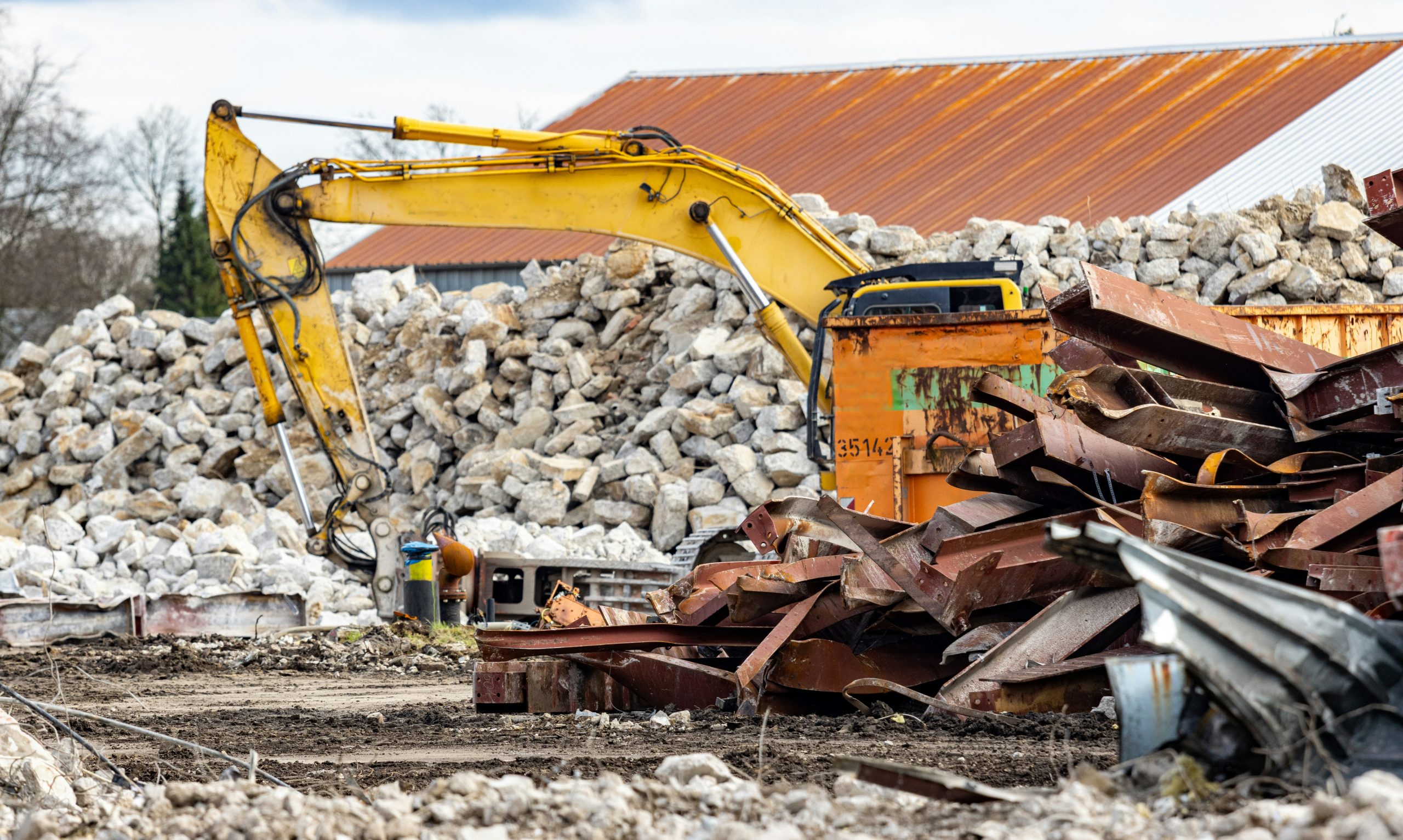
The U.S. Environmental Protection Agency says that construction and demolition activities generated 600 million tons of debris in the United States in 2018 alone. This staggering volume represents more than twice the amount of municipal solid waste the country produced during the same period, establishing construction as one of the largest contributors to the nation’s garbage stream.
Traditional jobsite waste management faces challenges at every project phase. Lumber offcuts, drywall scraps, packaging materials and damaged components accumulate rapidly across active construction sites. Outdoor storage also exposes materials to weather damage before installation, creating additional preventable waste that compounds the problem.
As landfill space shrinks and transportation costs rise alongside mounting disposal fees, the environmental and economic toll demands systemic changes in where and how structures are built.
How Does the Modular Process Reduce On-Site Disruptions?
Modular construction shifts most building activities into climate-controlled factory environments. This fundamental relocation results in fewer on-site disruptions and deliveries than traditional methods, transforming the typical timeline and environmental footprint.
Manufacturing facilities operate with standardized processes and proper storage protocols, eliminating many waste-generating scenarios that plague conventional jobsites. Likewise, heavy machinery use drops significantly when the bulk of construction happens off-site, lowering noise pollution and reducing preparation requirements.
Assembly crews arrive with finished modules ready for installation, rather than raw materials that require extensive on-site fabrication. Compressed active construction periods further limit the duration of environmental impact, while factory oversight maintains quality standards through consistent testing protocols.
How Does Modular Building Align With Circular Economy Principles?
A circular economy keeps materials in use as long as possible through design strategies that prioritize reuse, refurbishment and recycling. According to the World Green Building Council, current global economic systems have achieved only 7.2% circularity, revealing substantial opportunity for improvement across all industries, particularly construction.
Factory-based modular production naturally supports the following circular principles.
Reduces Material Waste
Precise, factory-controlled material calculations enable teams to order exactly what’s needed, significantly reducing excess scrap and offcuts common on traditional construction sites. This optimized approach to material management minimizes waste from the very start of the building process.
Designed for Disassembly
Modular components are inherently designed for deconstruction and reuse. Because they are created as standardized, independent units, they can be easily disassembled and repurposed for future projects. This also eliminates the need for energy-intensive demolition and preserves the value of the materials.
Extends Material Lifespan
Building indoors protects materials from weather-related damage, such as warping, mold and rust. This, combined with rigorous factory quality control, ensures that components are in pristine condition when they arrive on-site, extending their functional lifespan and reducing the need for premature replacement.
The industry is developing protocols for measuring and reporting how well building projects perform in terms of circularity. These frameworks track material sourcing, waste diversion and end-of-life planning, areas where factory documentation excels.
What Are the Quantifiable Reductions in Modular Construction Waste?
The modular factory setting is the primary driver of waste reduction. The process minimizes scrap, protects material integrity and translates to significant financial savings by controlling conditions and eliminating weather-related material damage.
For instance, a 2025 Results in Engineering analysis of large-structure projects suggests that cutting modular construction waste reduces costs by 47.9% through lower disposal fees, transportation expenses and labor needs. These savings prove that environmental responsibility and fiscal performance can advance together.
Excess material on one project can also be used on another, while scrap is directed to organized recycling programs rather than placed in mixed containers. Teams also catch and fix assembly errors before modules leave the facility, preventing the field modifications that generate substantial waste in conventional construction.
What Role Does Technology Play in Monitoring Jobsite Sustainability?
Industry guidance on circular building design helps teams consider durability, adaptability and the use of secondary materials earlier in the planning process. These principles support maintenance planning, future renovations and end-of-life material recovery in ways conventional linear documentation often does not.
Real-time monitoring platforms give project managers the data they need to back up sustainability claims. Systems like BEE Sense track energy use, waste diversion rates and operational efficiency, turning vague commitments into measurable results. Such systems are particularly valuable for modular projects, where factory production and on-site assembly create multiple data-collection points.
The verification these platforms provide further eliminates guesswork and supports certification applications and continuous improvement efforts. They help teams make informed decisions from construction through operations.
How Does Less Debris Translate to Green Building Certifications?
The Leadership in Energy and Environmental Design (LEED) framework awards points through its Materials and Resources credit category. LEED v5 introduces a flexible “Project Priorities and Innovation” category, where projects may earn up to 20 points for a wide range of innovative sustainability actions.
The WELL Building Standard takes a complementary approach by connecting material choices to human health outcomes. Responsible materials management reduces exposure to volatile organic compounds, supporting cleaner indoor air quality. Projects that use monitoring systems for features in the Air and Thermal Comfort concepts earn up to nine points on WELL v2 scorecards.
Modular construction naturally supports both certification paths. Factory settings generate consistent documentation and produce the metrics certification programs require, streamlining a process that traditional methods struggle to manage across dispersed jobsites.
Embracing Modular for Cleaner, More Efficient Jobsites
The industry can no longer sustain the waste levels generated by conventional construction. Effective jobsite waste management requires the systemic changes modular delivers, not incremental improvements to outdated practices.
About BEE Incorporations
BEE Incorporations has been delivering Conscious Engineering solutions to advance green and healthy indoor spaces globally since 2009. Headquartered in Shanghai with offices worldwide, BEE has completed projects in 40+ countries across the retail, hospitality, commercial and mixed-use sectors. Services span LEED, WELL, RESET and net-zero advisory, sustainable materials specification, building performance testing and the BEE Sense real-time monitoring platform. Learn more at bee-inc.com.